

A garage door opener remote can begin acting inconsistently before it fully stops working, especially when the range decreases or the button response becomes delayed. In San Francisco, CA, these symptoms are often linked to battery decline, but they can also overlap with signal interference or opener-side problems that require professional garage door repair service.
Understanding when to replace the battery helps restore reliable access and prevent unnecessary remote replacements. This guide explains the most common battery warning signs, how to distinguish battery issues from programming or receiver faults, and when professional service is the more effective solution.
Why Does a Weak Remote Battery Cause Range and Delay Problems?
A garage door opener remote can seem unreliable when the battery cannot deliver steady power, because the signal becomes too weak or unstable to reach the opener consistently, which can look like a larger garage door repair issue even when the garage door opener itself is still operating normally.
Common ways weak battery output shows up include:
- The remote works only at close range because the signal cannot carry as far
- Response becomes delayed because the transmitter struggles to send a clean signal
- Multiple presses are needed because the receiver only catches the signal sometimes
- The indicator light looks dim or flickers because the voltage drops under load
- Performance gets worse in cold weather because battery output declines faster in low temperatures
- One remote fails while the other remote controls work because its battery output is weaker
To understand how these symptoms differ from receiver faults and signal interference, read our guide on Why Is My Garage Door Opener Remote Not Working?, which outlines the most common causes and the diagnostic clues that help confirm the next step.
Common Situations That Signal a Garage Door Remote Battery Change
Remote Only Works at Close Range
Battery decline often starts with range loss, where the battery only reliably activates when standing near the garage door system.
Range loss often shows up as:
- Works only within a few feet of the garage door
- Fails from the usual parking position
- Hand angle changes whether the opener responds
- Vehicles or walls reduce response more than before
- Reliable distance shrinks over several days or weeks
Range drop that worsens over time often points to a weakening transmit output rather than a sudden opener fault.
Delayed Response or Works on the Second Press
A weak battery can cause delays because the remote may not send a stable signal during the first button press.
Response timing often shifts like this:
- First press fails, then the second press works
- Extra presses are needed before the motor unit starts
- Slower reaction than other remote controls in the home
- Back-to-back uses create more inconsistency
- Brief improvement after resting, then delayed return
Repeat delays during normal use often suggest unstable battery output, but if the opener starts and the door hesitates or binds during travel, a track realignment may be needed instead of continued remote troubleshooting.
Dim, Flickering, or Inconsistent Remote LED
A weak battery can affect the indicator light because the LED reflects voltage stability during signal transmission.
LED behavior often changes in these ways:
- Light appears dimmer than normal during button presses
- Flicker replaces steady illumination
- Light appears only sometimes, even with firm presses
- Light turns on, but activation remains inconsistent
- Light response changes with temperature or time of day
LED instability paired with range or delay problems often supports battery decline as a likely cause.
Remote Gets Worse During Cold Weather
Cold temperatures can reduce battery output, making borderline batteries more likely to fail during cooler hours.
Cold-related patterns commonly include:
- Works in warmer hours but fails when temperatures drop
- Range decreases sharply during cold mornings
- Repeat presses become necessary more often
- Better response after the vehicle warms up
- Similar problems return each winter
Seasonal reliability changes often indicate a decline in battery output, yet if colder temperatures also make the door feel heavy or strained, a spring replacement may be part of the discussion rather than remote troubleshooting alone.
Works After Sitting, Then Fails Again Quickly
A fading battery can recover briefly after rest, then drop again during repeated use over short periods.
Rest-and-fail patterns often include:
- Works once after pickup, then becomes inconsistent
- First use succeeds, later uses fail more often
- Back-to-back presses trigger uneven response
- Long pauses help temporarily, then failures return
- Reliability worsens over days or weeks
Stop-and-start performance usually points to an unstable battery, although uneven lift behavior during travel may suggest garage door cable replacement rather than a transmitter problem.
Battery Has Not Been Changed in a Long Time With Daily Use
Frequent daily use can shorten battery life, especially when the remote is used several times per day.
High-use clues often look like:
- Multiple cycles daily for commuting and errands
- Storage in a vehicle where heat accelerates the decline
- Range decreases gradually without a single failure moment
- Inconsistency increases during busy weeks
- Battery age unknown due to long gaps between replacements
High-use patterns combined with gradual decline often make battery replacement the most practical step.
Pressing Harder or Holding the Button Longer to Trigger
Weak output can make longer presses work better because the transmitter may only send reliably with sustained contact.
Press behavior often shifts like this:
- Long holds work better than quick taps
- Firm pressure works better than light presses
- Center presses trigger more consistently than edge presses
- Quick taps fail more often during normal routines
- Short improvement after a battery swap, then a decline returns if another issue exists
Press changes that develop over time often indicate the remote is struggling to transmit consistently.
One Remote Fails While Another Still Works
Comparing remotes helps because one failing remote alongside a stable one often points to the remote, not the receiver.
Remote-to-remote differences often include:
- One fails from the driveway while the other works normally
- One feels delayed while the other responds instantly
- One fails in cold weather, while the other remains steady
- The older remote fails more often than the newer remote
- Vehicle-stored remote fails more often than the indoor-stored remote
A clear performance gap between remotes often suggests battery decline or internal wear in the weaker remote.
Battery Problem or Remote Failure? How to Tell the Difference
Remote issues can look similar at first, but comparing behavior patterns side by side makes it easier to determine whether the problem is a simple battery decline or an internal remote failure that may require garage door repair or replacement.
Symptom Pattern | More Likely a Battery Problem | More Likely a Remote Failure |
The range gradually decreases over time | Yes, weakening output reduces transmit distance | No, internal failure is usually sudden |
Works after battery rest, then fails again | Yes, voltage temporarily recovers | Rare, as internal parts do not recover with rest |
The indicator light is dim or flickers | Yes, LED reflects unstable voltage | Possibly, if light fails completely, regardless of the battery |
No response at any distance, even with a fresh battery | Unlikely | Yes, internal board or button contact may be damaged |
The button must be pressed very hard to work | Sometimes | More likely, worn internal contact points |
The remote stopped after being dropped | Unlikely | Yes, impact can damage internal circuitry |
Water exposure occurred | Unlikely | Yes, moisture can damage internal components |
One remote fails while others work | Likely, individual battery decline | Possible, if that remote is physically worn |
Clear differences in response consistency, range behavior, and physical condition often help determine whether replacing the battery is sufficient or whether the garage door opener remote itself needs service or replacement.
Battery vs Receiver vs Interference Issues That Mimic Battery Failure
Remote problems do not always start inside the battery; receiver sensitivity changes, antenna positioning, and signal interference can cause the same short-range, delayed-response symptoms seen with a garage door opener remote’s battery decline.
Symptom Pattern | More Likely Battery Issue | More Likely Receiver Issue | More Likely Interference Issue |
Range slowly decreases over weeks | Yes, output weakens gradually | Possible, aging receiver sensitivity | Unlikely unless a new device is added |
Works only very close to the garage door | Yes, weak transmit power | Yes, poor antenna or receiver sensitivity | Yes, a strong nearby signal is blocking transmission |
All remotes fail at the same time | No, unlikely all batteries decline together | Yes, receiver or opener board problem | Possible, major signal disruption |
The remote LED looks dim or flickers | Yes, voltage instability | No, the receiver does not affect LED brightness | No, interference does not affect the LED |
Works at certain times of day only | No, battery decline is not time-based | Possible, temperature affecting electronics | Yes, devices turning on/off nearby |
Works indoors but not from the driveway | Yes, weak output | Yes, antenna placement issue | Yes, neighborhood radio noise |
The new battery does not improve the range | No, battery replaced | Yes, receiver or antenna issue | Yes, environmental interference |
The problem began after installing LED bulbs | No, unrelated to battery | Possible receiver sensitivity | Yes, LED lighting interference is common |
Comparing symptom timing, range behavior, and whether multiple remotes are affected helps distinguish between battery decline, receiver faults, or environmental interference before assuming the garage door opener remote itself has failed.
When a Battery Change Does Not Solve the Issue
A fresh battery should improve range and response, so continued failure often points to remote damage, receiver sensitivity problems, compatibility mismatch, or signal interference affecting how the opener recognizes commands.
- Physical wear, like cracked housing, stuck buttons, or moisture exposure, can prevent consistent signal output
- Internal button contact wear can causean intermittent response, even when the indicator light looks normal
- Receiver sensitivity decline in the opener unit can reducethe range across multiple remote controls
- Antenna position or damage can weaken reception and make the remote seem unreliable
- Compatibility issues can appear when using a universal remote across different brands or older systems
- Interference from nearby electronics or certain lighting can block or distort the signal path
To confirm whether replacement is the right next step and avoid compatibility issues, read our guide on How to Replace a Garage Door Opener Remote, which explains different ways to match remotes to the opener system and ensure stable daily operation.
When Programming Is the Real Problem, Not the Battery
Remote pairing issues can appear as battery failure when the garage door opener fails to respond at any distance, even though the remote indicator light remains normal and button presses feel consistent.
- Remote stops working right after a power outage or electrical reset
- All remote controls fail at the same time without any gradual range decline
- Remote work briefly after changes to the opener unit, then stops again
- Learn mode was triggered by accident, so the receiver memory no longer matches the remote
- Newer models were added, and older remotes stopped responding afterward
- Keypad still works, but the handheld remote does not, which can signal a pairing problem instead of weak output
To verify whether the problem is due to a lost pairing rather than battery decline, review our guide on How to Program a Garage Door Opener Remote (Most Models), which outlines the standard programming methods for connecting a remote to a compatible garage door opener.
LiftMaster also explains how to program a remote to a garage door opener using several setup methods, along with compatibility checks and troubleshooting steps to confirm whether the issue is a pairing issue rather than a battery failure.
LiftMaster Garage Door Opener Remote Battery Issues to Watch For
LiftMaster remotes often show battery decline through range loss, delayed response, and inconsistent indicator light behavior that can appear before the remote fully stops working.
- Range drops first, so activation works near the garage but fails from the usual driveway spot
- Response feels delayed, so a second press works more often than the first
- The indicator light looks dim or flickers during button presses
- Cold-weather reliability decreases, especially during early mornings or cooler evenings
- Short bursts of normal performance happen after the remote sits unused, then inconsistency returns
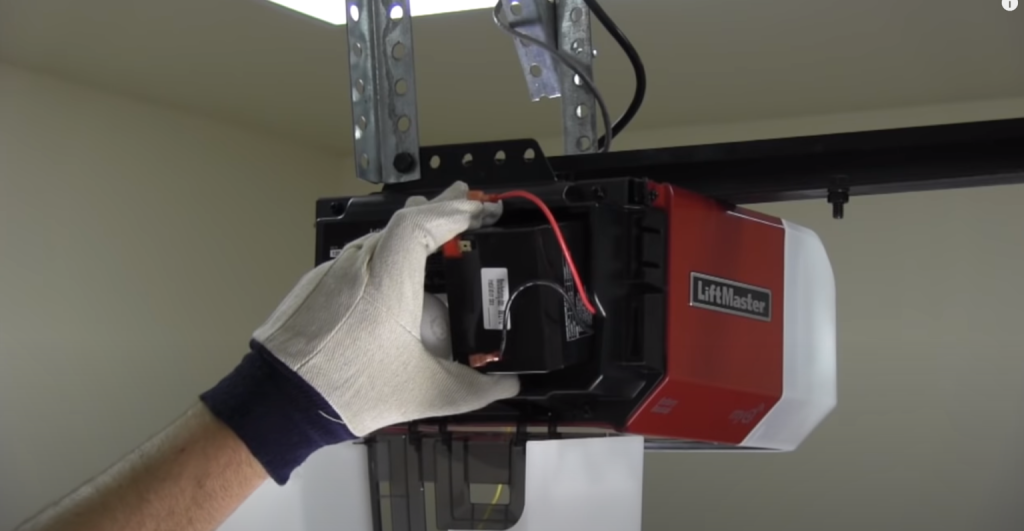
LiftMaster provides official battery replacement instructions by remote model and battery type, including safety guidance and compatibility details that help confirm whether battery decline is the cause of range loss and delayed response.
Garage Door Opener Remote Battery Help in San Francisco, CA
A weak battery is one of the most common reasons a garage door opener remote becomes inconsistent, but range loss and delayed response can also be caused by interference, receiver sensitivity, or compatibility problems tied to the opener setup.
Automatic Garage Door Corporation helps San Francisco, CA, homeowners by checking the remote, receiver, and signal conditions as a single connected system. When reliable access matters and the problem keeps returning, contact us or give us a call today to schedule service and restore consistent remote performance.
Frequently Asked Questions
Can a low battery affect a keypad the same way it affects a handheld remote?
Yes. If the keypad uses a battery, weak output can reduce range and cause delayed response or missed entries. We can confirm whether the keypad signal is weakening or whether the receiver is the real issue.
Can a battery drain faster if the button gets pressed in a pocket or glove box?
Yes. Accidental presses can shorten battery life and lead to earlier range loss. We can check whether the button is being triggered unintentionally or whether the battery is simply nearing the end of its life.
Will a weak battery affect one button more than another on a multi-button remote?
Yes. Uneven response can occur when a worn button and a declining battery overlap, especially on the most-used button. We can test whether the issue is power output or internal button contact wear.
Can a weak battery cause the operator light to flash but the door not move?
Sometimes. The opener may recognize the signal, but another condition can stop the cycle, such as a safety input or travel resistance. We can verify whether the signal reaches the opener and then trace the stop condition.
Does a battery change affect the rolling security codes or the receiver's memory?
No. A battery swap should not erase pairing or rolling-code settings. If the remote stops working after a battery change, lost pairing or compatibility issues are more likely than battery-related failure.
What if the remote works inside the garage but not from the driveway, only at night?
Time-based behavior often points to interference from electronics or lighting that turns on at night. When this happens, the next step is to search for a garage door opener remote near me to find a team that can test receiver sensitivity, check for interference sources, and confirm whether the remote or the opener is the true cause.
Can LED bulbs make a healthy battery seem weak?
Yes. Some LED bulbs create radio noise that reduces effective range and makes the remote seem underpowered. We can isolate whether lighting-related interference is shrinking the range even with a fresh battery.
Should I replace batteries in all remotes at the same time?
It depends. If multiple remotes are the same age and used daily, replacing them together can reduce inconsistent performance across remotes. We can also test each remote so stable units are not replaced unnecessarily.
Is it normal for a new battery to still have poor range right away?
No. Poor range after a new battery often points to receiver sensitivity, antenna placement, interference, or a failing remote. If the issue continues, garage door opener remote repair may be the most efficient next step.
Can a low battery cause a delayed trigger after pressing the button?
Yes. Weak output can cause the receiver to intermittently catch the signal, leading to a delayed activation. If pairing appears unstable, garage door remote programming may be needed to restore a consistent connection.